

⛅︎ Let your "light shadow" shine
Creative play unlocks resilience and courts possibility

Today is part five in our limited series about the role of the shadow in finding alternatives to our inherited cultural stories. If you missed the introduction, it’s here.
I was surprised to learn that some of us also have a “light shadow.” Driven by the need to fit in, not to upstage anyone, I developed a pattern of stuffing my own unique talents underground. It came from a desire not to shine too brightly, not to spark jealousy or alienate people, to be liked above all.
At the same time, my own envy of other creative people pains my heart. But such hiding is a form of modesty that violates my soul’s contract, the very reason I’m here. False modesty is also an attempt to inoculate myself against criticism, disappointment, and rejection. If I don’t shine too brightly, I have a ready excuse for why my work doesn’t land with someone.
I’m still finding my way to self-permission, to shining anyway, damn the consequences. Al-Anon helped me to disconnect from other people’s expectations and disappointments. I learned that it’s not irresponsible to stay in my lane, to sort out what’s mine and what belongs to others. What a relief. I can let my freak flag fly.
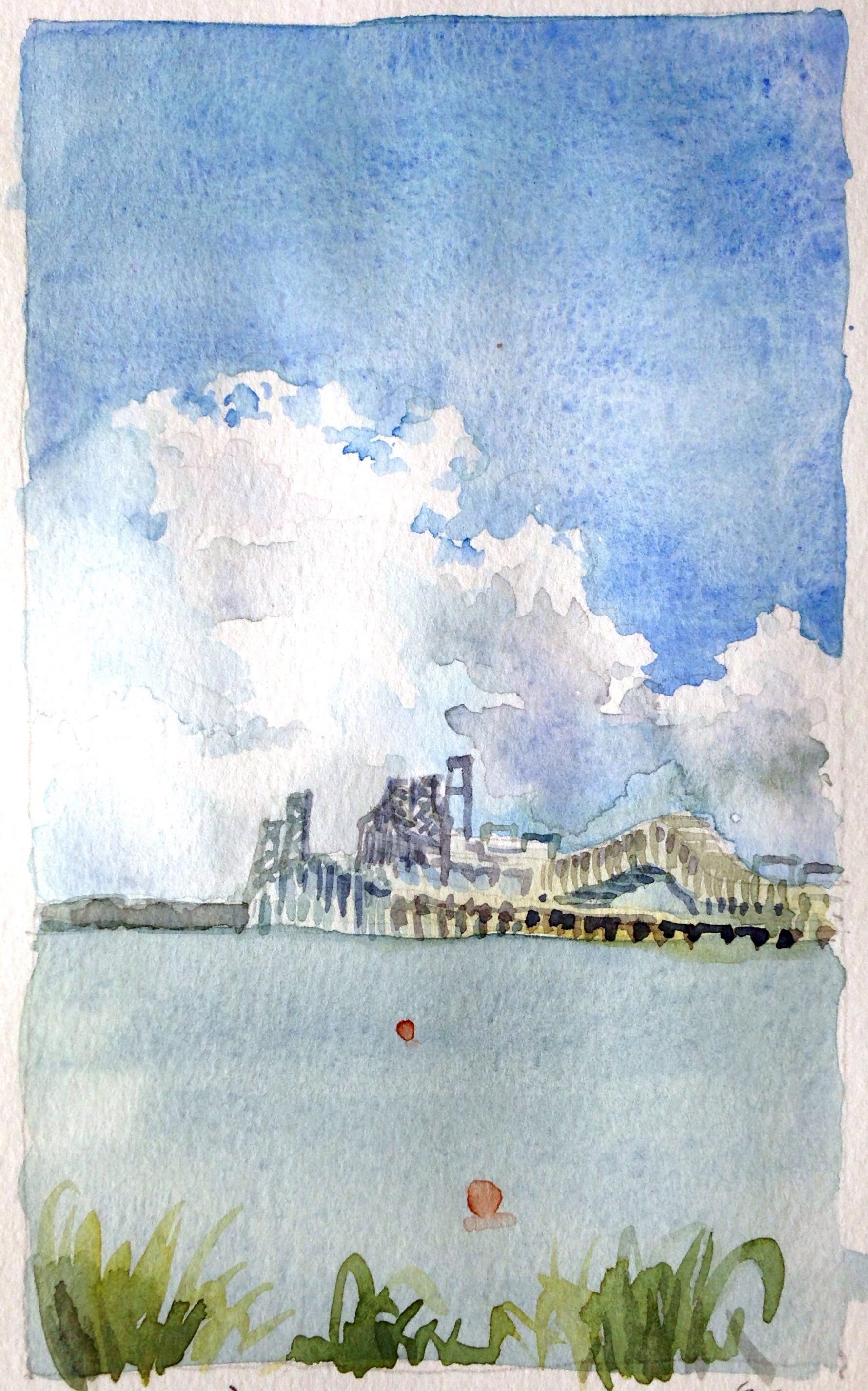
When I do follow my heart and pay attention to what it guides me to do and how that feels, I notice salutary effects. When I’ve been creative early in the day, I have more resources in frustrating situations that arise later. A while back, inspired by Nina Katchadourian’s “Sorted Books Series,”1 I played with arranging random books with interesting titles to form poetic phrases. Later that day, I spent maybe twenty minutes doing a quick watercolor of clouds over the Chesapeake Bay Bridge while at the after party for the annual Bay Swim.


That evening, when faced with a cranky, most unpleasant teenager, I seemed to have endless patience with him. Instead of the usual reactionary “who do you think you are” inner voice goading me to say things I’d regret, I kept trying different ways to reach him and bring him back to his usual sunny self. I stayed calm and nimble, creative instead of triggered.
What’s behind this magic? My first thought is that creative play inoculates me. It puts me in a good mood, so I can face challenges with resilience. And, while that’s true to a degree, there’s something deeper at work here.
What was going on as I sorted through books and arranged them into piles to form haikus, koans, or just evocative, playful phrases? What about when I was sitting in the blazing hot sun, working color onto paper to capture a boiling thundercloud in a summer blue sky? In both cases, I was in a charmed space of possibility, of both/and, of no right or wrong. I asked questions like, what happens if I try this? I gave myself permission to seek, without having a specific direction or expectation of finding anything in particular. Whenever a theme or phrase or color emerged, it was a delightful surprise. A discovery. A gift.
Our culture tells us that, as adults, we must be serious. We must contribute to making the world better, or making money to support our families, all outer-directed goals. Nose to the grindstone, shoulder to the wheel. Which is not an enjoyable way to go about anything. I was raised to seek, even expect, “correct” answers to my questions. And if I don’t get it right, I must be wrong. There’s a best way to do something, usually as directed by an authority figure. First mother, then teacher, then boss or client. Follow directions. Follow the rules. Stay in line.
It feels subversive to advocate a playful approach instead. I think of that phrase, “Play is the work of the child,” referring to how children learn by imitating the adults around them. What if play is also the work of the adult? Not that we should all start acting as if we have no responsibilities. There’s a faculty all humans possess called the imagination. Let’s use it more. Let’s give ourselves permission to approach our work with curiosity, expansiveness, and possibility. We just may find we’re living more from our hearts, enjoying our work, and meeting serious, “real life” challenges with creativity, wit, and resilience.
When I first heard, really heard, this song, I played it over and over again, weeping with the grief and relief of deep recognition and also a complete absence of rational understanding. It felt like a pleading message directly from my soul, wrapped in the achingly beautiful harmonies of Plant and Krauss. Because the lyrics can mean anything, they mean everything.
Each season, we donate 30% of paid subscriptions to a worthy environmental cause. This season, it’s Indigenous Climate Action. They envision a world with sovereign and thriving Indigenous Peoples and cultures leading climate justice for all. Track past and current recipients here.
What did you enjoy most about this essay? I’d love to hear from you. Or share it with others by restacking on Notes, via the Substack app. Thanks!
To shine anyway...
nay/doomsayer voice be damned.
Let our "freak flags fly."
Time to sneak off and play with Book Stack Poetry. My eclectic shelf contents should give me plenty of ways to stack. Thanks for a fun way to rediscover the joy of being creative.