

Are we redeemable?
The arts help us to integrate rather than avoid the shadow

Today is the second in a limited series looking at the role of the shadow in considering alternatives to our inherited cultural stories. Madness, darkness, the untamed and unpredictable—what do we do with these fearful things? If you missed the introduction, you can catch up here.
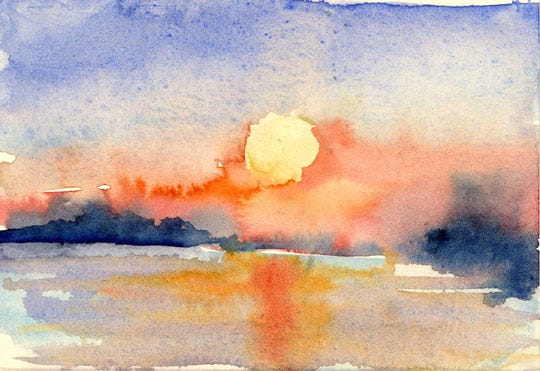
If the world is night
Shine my life like a light
…
I've seen the kingdoms blow
Like ashes in the winds of change
Yeah but the power of truth
Is the fuel for the flame
So the darker the ages get
There's a stronger beacon yet

Let it be me
…
I love these lines by the Indigo Girls.1 They say something important on my behalf, something I wasn’t even aware of until I heard this song for the first time. I do wonder whether my inclination to light candles rather than curse the darkness can be a crutch, an attempt to shortcut or avoid the unknown.
I tend to focus too much on the positive, which leaves out a whole rich aspect of reality: the shadow. What can this wild, mad, evil, naughty, unpredictable, untamed, uncontrollable part of me teach me about myself, and—more ambitiously—about our culture?
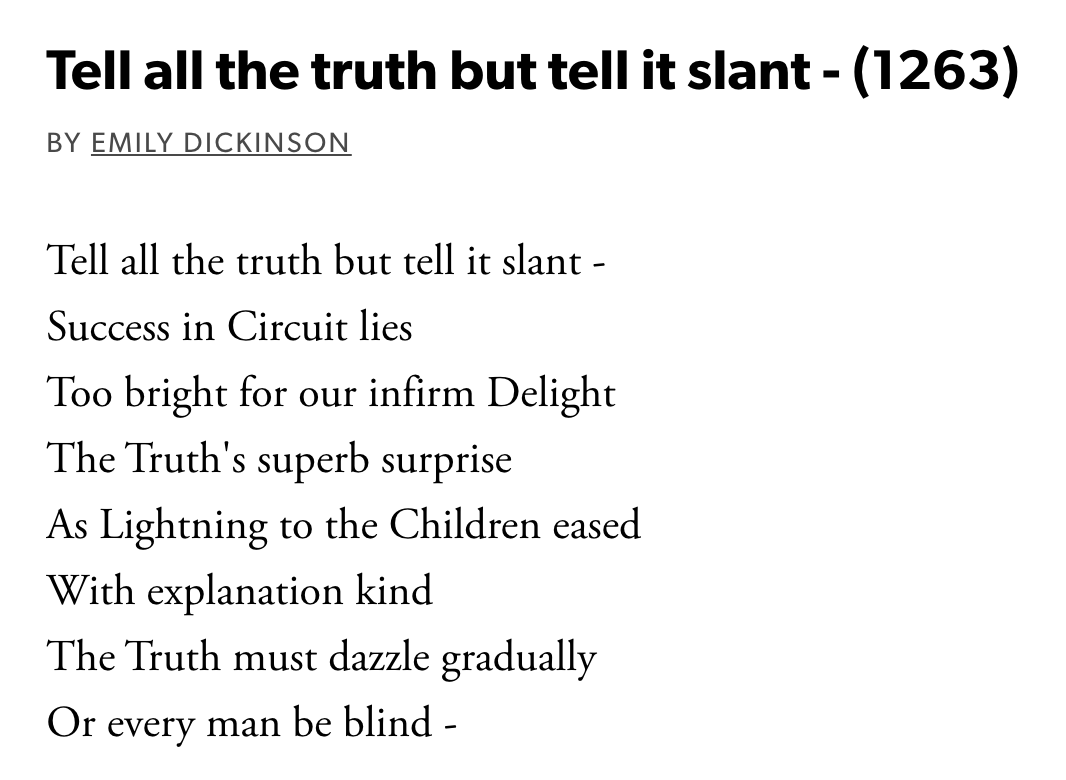
The approach to considering the shadow makes a difference. It’s shadowy for good reason, so best not to approach directly. The arts—poetry, music, literature, dream work, theater—speak the language of symbols. This allows us to peer at reflections, sneak in the side door, “tell it slant.”
The British actor, David Oyelowo, played Rev. Martin Luther King in the film, “Selma,” and a Black Panther member in “The Butler.” There’s a wonderfully awkward dinner scene in the latter, in which Oyelowo’s character disses his real-life hero: Sidney Poitier. He has said it’s the most difficult line he’s ever had to say as an actor.
In a 2015 interview with Terry Gross, Mr. Oyelowo said that he always turns down stereotypical afterthought roles like the “black best friend.” When she asked if there are other roles he declines, he said something very interesting:
“I hate horror. I won’t do horror films. I don’t really, personally, see the value in them. Anything that, basically, is overtly celebrating darkness, and, to be perfectly honest, sanctioning it, that’s something I can’t personally do. I feel you cannot see the light without darkness, but, for me, a prerequisite I have for myself is that light must, eventually, win out. And that’s just what I choose to put out into the world. I believe in it; I know that films affect and shape culture, and I want to put stuff in the world that I feel is edifying, as opposed to stuff that is detrimental.”2
As a classically trained actor, Oyelowo has been in a lot of Shakespeare plays, so he knows what’s possible in the storytelling art of theater. The world of the play includes both darkness and light. And isn’t that one of the great services of drama? To give us the vicarious experience of inhabiting every character, including the villains, so that, in the end, when good triumphs and evil is punished, the moral lessons are delivered directly into our subconscious.3
A key narrative of the dominant culture is that we have evolved past having to put up with evil and darkness, or even moral weakness. Whether it’s science, AI, psychoanalysis, pharmaceuticals, religion, incarceration, the Singularity, or space travel, we have the tools to perfect ourselves. We have only to project our dark, inferior, diseased, insane aspects onto others, then treat, cure, jettison, or lock them up.
This is the story that gave birth to the “War on_____” policies: War on Poverty, War on Drugs, War on Terrorism. We saw the consequences too frequently in so-called “post-racial America,” and now daily in MAGA America: ICE raids, pointless wars, the attack on voting rights, on and on.
David Oyelowo didn’t say that he only plays light roles. He said he won’t play roles that wallow in darkness, because they do actual damage. He chooses roles that integrate the dark and the light.
There’s a classic plot form called the “Redemption Story,” where the hero or heroine starts off jaded, self-centered and pessimistic, then undergoes a series of trials that change her. By the end, his world has expanded: lessons learned and perspective shifted. She’s more honest with herself, perhaps more altruistic. He does something surprising and generous, seemingly out of character. Think Rick in “Casablanca.” Sure, he knows there’s evil and darkness in the world. He also knows that a light burns inside of him and it’s his choice whether to shine it or hide it behind cynicism and apathy.
Our culture is suspicious of the redemption plot. We’re taught to believe that optimism is futile. We’re doomed and we deserve our fate. Take the climate crisis or the Sixth Extinction. Even the most dedicated environmental activists sometimes fall into despair that Earth would be better without us.4
To believe otherwise is just Pollyanna, wishful thinking, so goes the messaging. In response to this cynicism, I come back to the power of story. We create worlds through the stories we tell. It’s that simple and that irrational. There is magic and mystery in storytelling, something Mr. Oyelowo understands well.
Why not tell stories of redemption? Maybe we must reclaim or at least meet our own individual shadows before we feel deserving of redemption. There’s been so much projection of shadows that the entire culture is blanketed by a great storm cloud. All we can see is darkness, wherever we look.
We just experienced the summer solstice here in North America—the shortest night of the year. Between the Autumnal and Vernal Equinoxes, night is either equal to day or greater in length. The good news is that darkness is not without its rewards. When we sleep, we are gifted an abundant, rich source of material for exploring the shadow: our dreams.
Just now, I’m wondering if Mystery isn’t having its way with me, nudging me to explore the shadow at the time of year when we have the most light. Could this be the safest time all year to delve into this difficult and dangerous topic? Only one way to find out.
Each season, we donate 30% of paid subscriptions to a worthy environmental cause. This season, it’s Indigenous Climate Action. They envision a world with sovereign and thriving Indigenous Peoples and cultures leading climate justice for all. Track past and current recipients here.
If you enjoyed this, please share and comment. It’s always wonderful to hear from you. Stay safe and take good care.
The full song is at the bottom of this post, via YouTube
Spoiler alert. We recently watched the long-awaited second season of “The Night Manager,” inspired by the John Le Carré novel. Great cast: Tom Hiddleston, Olivia Colman, Hugh Laurie. Season 1 ends with a very satisfying comeuppance that puts Hugh Laurie’s villain in a Syrian prison for a very long time. He’s back for Season 2, but at the very end of the final episode, guess what? He wins. Evil triumphs over good. I guess that’s the mood of the times, but it felt like a betrayal of the promise of drama. Compare that to the final scene in “Othello,” where, okay, yes, the women are both murdered, but Iago is outed and will be severely punished.
The ecotheologian, Thomas Berry, was adamant that this is wrong. We do have a divine purpose—to celebrate the wonders of Creation. The story in Monday’s kick-off post gives a flavor of that.
One of your best, Julie.
This is so interesting, Julie. Thank you. I so agree with what you say here.
As Carl Jung said, ‘One does not become enlightened by imagining figures of light, but by making the darkness conscious.’
One cannot see the light without darkness but, as you say, to wallow in darkness causes actual damage.
Mr Oyelowo understands well.